POS System Credit Card Processing: Without vs. Built-In
Himanshu Daudia | 11 Min Read

Running a retail or service business? Then you know how crucial fast, secure, and hassle-free payments are. That’s where POS-integrated payment processing comes in.
Integrated payment processing means your point-of-sale (POS) system and payment terminal work as one. No manual entry. No switching between devices. Just seamless, automatic transactions – whether it’s credit, debit, mobile wallets, or contactless payments.
For busy retailers, it’s a game-changer — saving time, cutting costs, and boosting sales.
The FTx POS system takes it further by combining integrated credit card processing with powerful retail tools — loyalty programs, inventory tracking, and AI-powered analytics — all in one place.
No juggling multiple systems. Just smarter payments, smarter selling.

If you’ve ever manually typed card numbers into a terminal or juggled between a POS system and a separate card reader, you know the frustration. Integrated payment systems eliminate that hassle — but how?
Integrated vs. Non-Integrated Payments:
Feature Integrated Non-Integrated Transaction Time Fast Slower Manual Entry No Yes Error Risk Low High Sync to Inventory Automatic Manual Reporting Unified Fragmented
Still Using A Non-Integrated Payment Method?Handle every payment directly inside your POS. No third-party system required, no reconciliation headaches.
Cashier rings up a $50 sale on the POS.
Then, they manually enter $50 into a payment terminal.
If they mistype $55, the customer gets overcharged, leading to disputes.
POS sends the exact amount to the terminal.
Customer pays; receipt prints — done in seconds. Zero errors.
When these work together, you get:
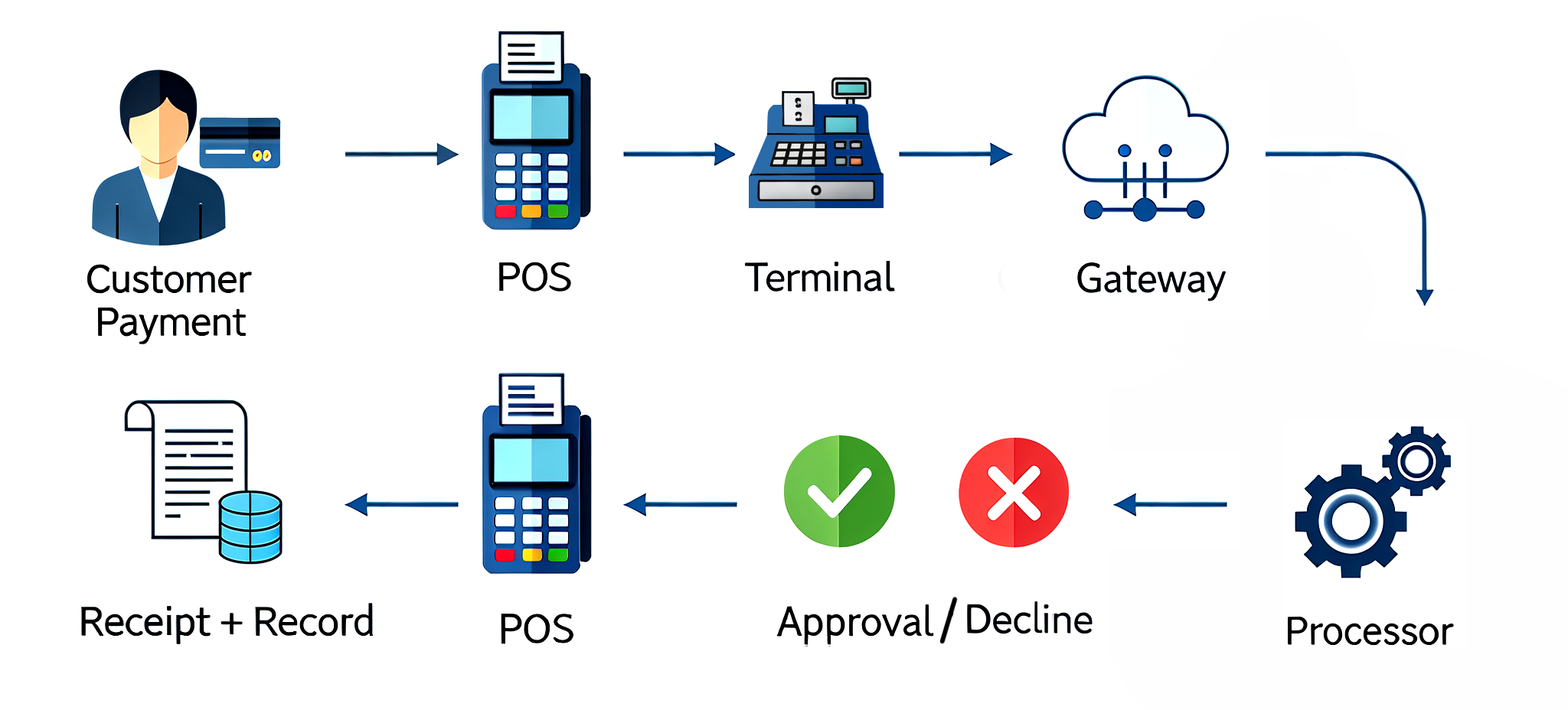
Ever wondered what happens behind the scenes when a customer taps their card on your terminal? Let’s break it down — step by step.
Swipes, inserts, taps, or uses a mobile wallet (Apple Pay, Google Pay, etc.).
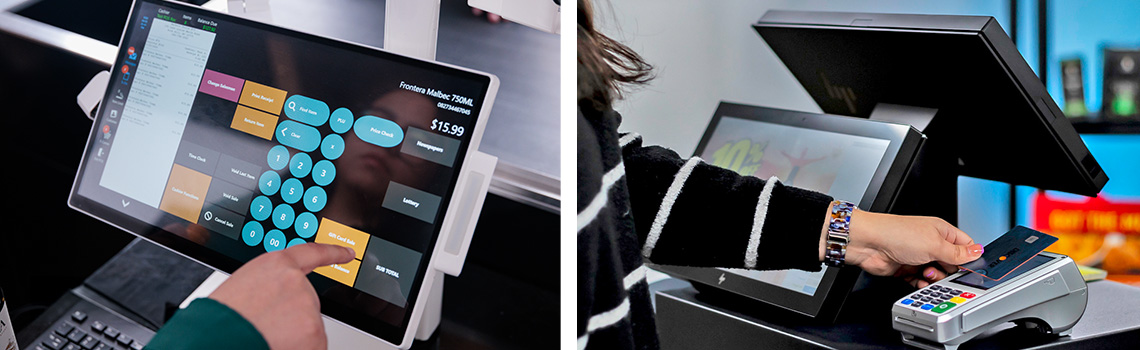
Your FTx POS automatically sends the transaction amount to the payment terminal — no manual entry.
The payment gateway (like FTx Card Payments) encrypts the data and routes it to the processor (Visa, Mastercard, etc.).
In 2-3 seconds, the processor responds:
A digital/physical receipt prints.
Sale logs automatically in your POS reports and inventory.
Customer Payment → POS → Terminal → Gateway → Processor → Approval/Decline → POS → Receipt + Record
Let’s be real – when customers reach for their wallets, you need payments to work. Right now. No glitches. No delays. Just smooth, secure transactions that keep people coming back.
Here’s why integrated payment processing is a must-have for any serious merchant service account.
Integrated payment systems eliminate the back-and-forth between separate devices. When your POS syncs directly with payment processing, transactions complete 2-3x faster— critical during rush hours.
Manual entry mistakes (like charging $500 instead of $50) vanish. Amounts auto-transfer from POS to terminal, ensuring accuracy in every sale while reducing costly disputes.
Automated reconciliation means daily sales reports, tax calculations, and inventory deductions happen without spreadsheets. For multi-location businesses, centralized tracking is invaluable.
An integrated payment system automatically transfers the exact sale total from your POS to the terminal. This eliminates typos and incorrect charges, protecting your revenue. This precision is vital for compliant operations like age verification online for tobacco sales, ensuring every restricted transaction is logged accurately.
Related Read: Enterprise Point of Sale: Transforming Multi-Store Retail Operations
Integrated credit card processing slashes checkout times compared to conventional payment systems. Customers get:
Modern shoppers expect to pay via:
Professionalism shines through a seamless checkout experience. Features like:
Our system bundles these benefits with inventory controls and BI analytics — so you profit from integrated payment solutions without managing disjointed tools.
Smarter Payments Start Here! Switch & Save Big $$$ on Processing Fees with FTx POS.
Different industries have unique payment needs.
Here’s how integrated payment processing solves real challenges across key sectors:
Problem: Long checkout lines during peak hours hurt sales.
Solution:
Problem: High-volume, low-margin sales demand efficiency.
Solution:
Problem: Manual order entry leads to errors and slow table turnover.
Solution:
Problem: Online and in-store systems don’t communicate.
Solution:
Problem: Appointment-based payments create back-office chaos.
Solution:
While integrated payment systems offer seamless operations, some businesses still use other methods.
Here’s a quick breakdown of alternatives and their trade-offs:
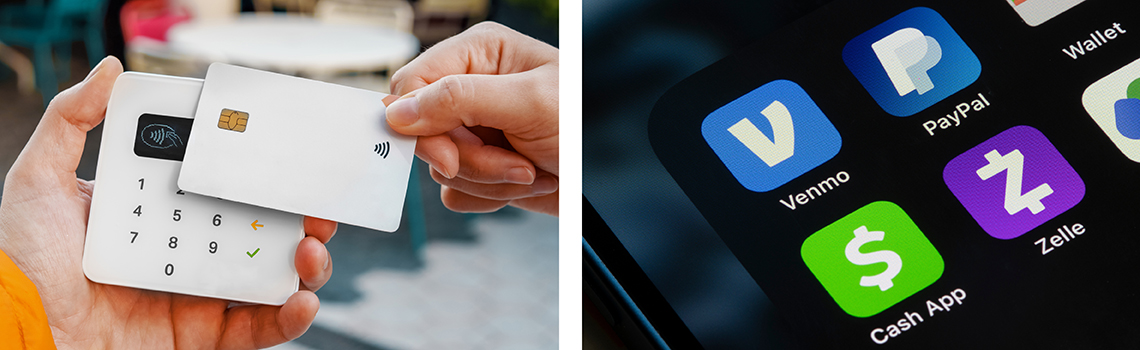
How it works: A separate credit card machine not connected to your POS.
Pros:
Cons:
Best for: Micro-businesses with under 50 daily transactions.
How it works: Customers scan a QR code to pay via apps like PayPal or Venmo.
Pros:
Cons:
Best for: Pop-up shops or market vendors.
How it works: Email/SMS payment links are sent to customers.
Pros:
Cons:
Best for: Contractors, freelancers, or wholesale sellers.
How it works: Stores card data to process when internet is available.
Pros:
Cons:
Best for: Businesses in areas with unreliable internet (but not recommended long-term).
Switching to an integrated payment platform offers huge benefits, but the path isn’t always smooth. Being aware of potential hurdles helps you choose the right partner and prepare for a successful transition.
Here are some common challenges retailers encounter:
The initial investment for a new POS system with credit card processing and compatible hardware can be significant.
Employees need time to learn the new integrated payment system, which can temporarily slow down operations.
Since most modern systems are cloud-based, any internet outage can halt your POS credit card processing completely.
You are responsible for maintaining strict PCI DSS standards to protect customer data, adding a layer of ongoing security management. This is especially critical when handling sensitive data for tasks like age verification online for tobacco sales.
Newer integrated payment solutions may not work with your existing, older POS hardware, forcing a full system upgrade.
Get Ready to Modernize Integrated Payment SystemSay “Goodbye!” to disconnected tools! It’s time to switch to a fully integrated payment system built for modern retail.
Some integrated payment platforms lock you into using their specific payment gateway, limiting your flexibility to shop for better rates.
Network congestion or system lag can slow down POS and credit card processing during your busiest times, leading to customer frustration.
Syncing online and in-store payments into one cohesive all-in-one payment processing system can be complex.
Some providers bury costs like statement fees or early termination fees in their contracts for integrated credit card processing.
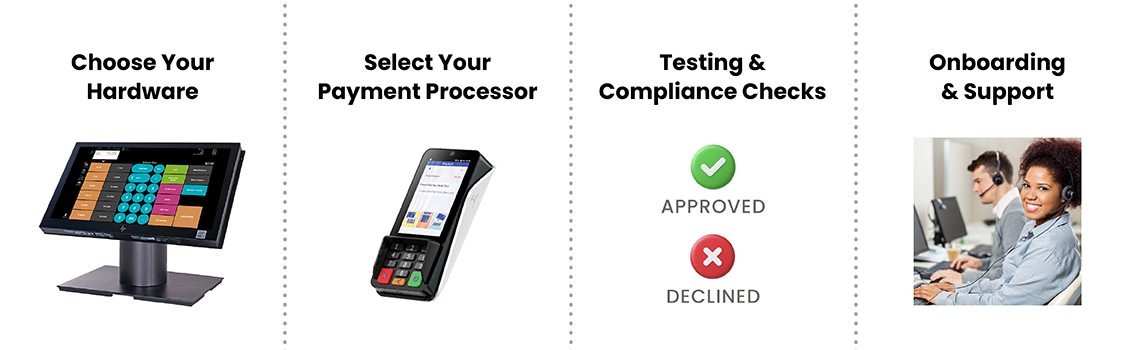
Switching to integrated payments with FTx POS is simple — no tech expertise required.
Here’s a step-by-step guide to getting started:
FTx POS works seamlessly with:
You have two options:
For a detailed walkthrough on setting up payment processing, take a look at our guide “Prerequisites Guide for Installation & Updates,” or watch our quick video on credit card terminals.
Which to pick? If you want one less vendor to manage, FTx Card Payments is the way to go.
Before going live:
Our experts will guide you through the initial setup, including software installation and hardware configuration, to ensure everything runs smoothly.
Get a walkthrough of FTx POS functionalities important to your business and learn how to use them confidently.
Tailor FTx POS to your business needs; our experts provide instruction and support on customizing the software for specific use cases.
Request personalized instruction beyond initial onboarding; book team training to empower your employees.
Get the help you need — when you need it. Our support team is available Monday through Friday, 8 AM to 8 PM (EST), with optional 24/7 support available after hours.
Integrated payment systems are powerful, but some misconceptions keep businesses from adopting them.
Let’s set the record straight.

FTx POS works with:
Integrated systems outperform legacy methods with:
Bottom Line: Today’s integrated payments are flexible, affordable, and built for businesses of all sizes.
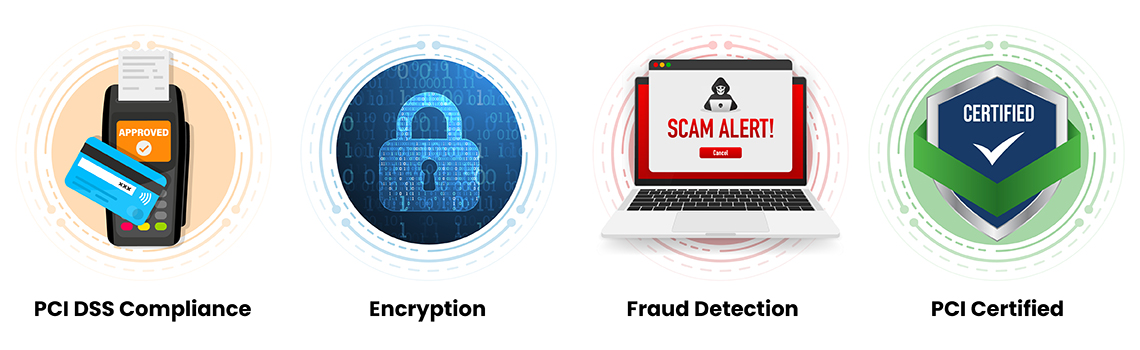
Every payment you process carries sensitive customer data. Small businesses are more prone to hacking and other malicious attacks, making your POS software solution the frontline of defense. FTx POS builds enterprise-grade security into every transaction while keeping you compliant.
What it is: The Payment Card Industry Data Security Standard (PCI DSS) is a set of security requirements for handling card data.
Why it matters: Fail compliance → Fines up to $100,000/month or worse — a data breach.
End-to-end encryption (E2EE): Scrambles data from swipe to processor.
Even if hackers breach your system, they get gibberish, not card numbers.
FTx POS fights fraud with:
For High-Risk Industries (Like tobacco/vape shops):
FTx POS only supports PCI-certified hardware, meaning:
The payment landscape is evolving rapidly, and integrated systems are at the heart of this transformation.
Here’s what’s coming — and how FTx POS is leading the charge:
Why it matters:
Future systems will automatically:
Loyal-n-Save: Our loyalty program already links purchases to rewards.

Expect:
In a crowded market of payment solutions, FTx POS stands apart — not just as a tool, but as a growth engine for your business. Here’s why retailers trust us:
Where competitors offer fragmented solutions, FTx POS delivers:
No workarounds. No disjointed apps. Just one system that does it all.
Unlike rigid competitors, we empower you to choose:
We’ve eliminated the pain points of traditional POS onboarding:
Assistance from retail experts, not script readers:
What begins as a simple checkout upgrade ripples across your entire operation – shorter lines become happier customers, streamlined reconciliation means better cash flow, and payment data transforms into actionable business intelligence.
Integrated payments do more than process transactions; they remove friction at every customer’s touchpoint while giving you the tools to scale smarter.
Modern retailers understand that payment processing has graduated from a back-office function to a frontline competitive advantage. 0
Ready to ditch 20th-century clunky systems and become a 21st-century modern retailer?


Himanshu Daudia | 11 Min Read

Himanshu Daudia | 13 Min Read

Himanshu Daudia | 17 Min Read